
Protection of Cultural Property and the Fourth Battlefield
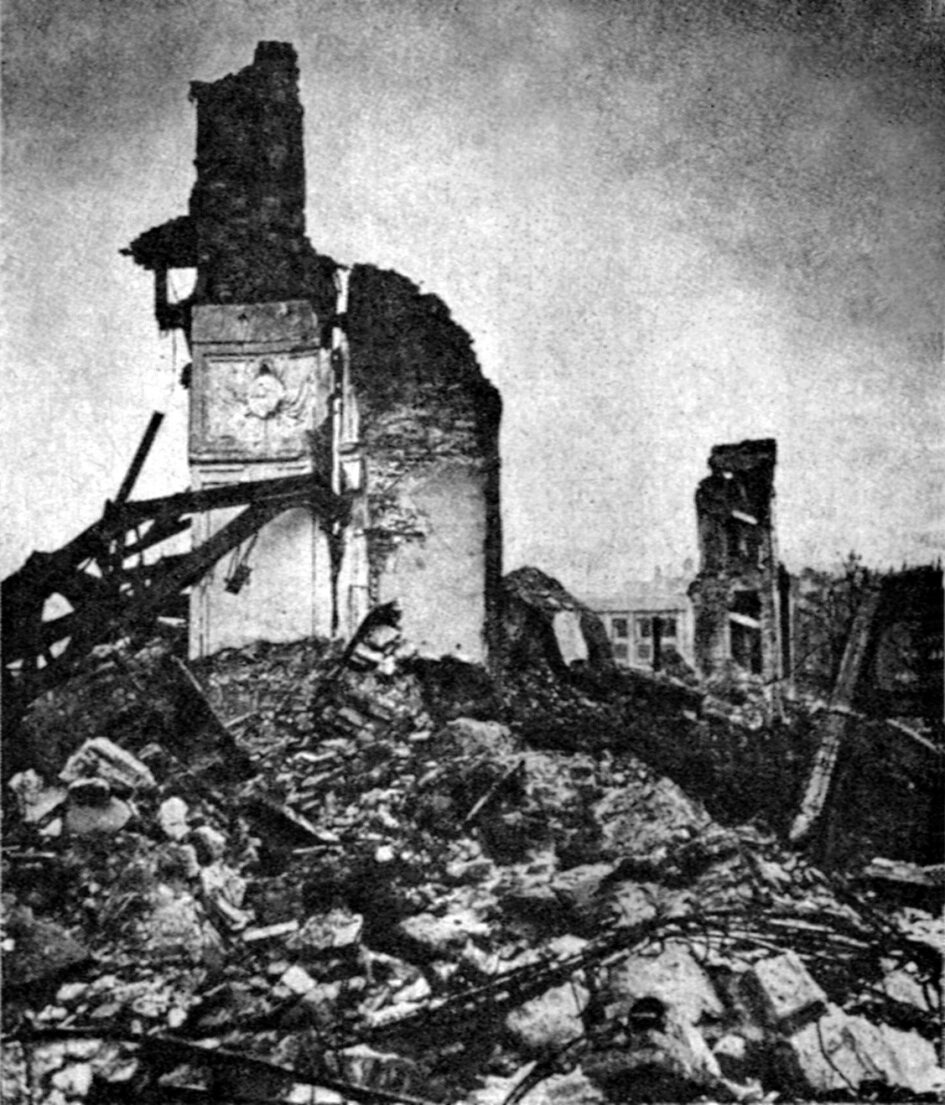
Attacks on cultural heritage in modern armed conflict are more than just the destruction of bricks, wood, or mortar. They are not only attacks on human lives but also the identity, memory, dignity, and future of humanity. This positions culture as the fourth dominant battlefield after digital, economic, and environmental domains. The international community, particularly after the destruction by World War II, has developed a framework of International Humanitarian Law (IHL) to mitigate this impact: Convention for the Protection of Cultural Property in the Event of Armed Conflict.
This article aims to examine some basic concepts and the significance of the international legal framework for protection of cultural property in the event of armed conflict. For these purposes, the article will serve a conceptual framework consisting of distinction between tangible and intangible cultural heritage & levels of protection in the event of armed conflict and the universal importance of the matter.
In contemporary armed conflict, attacks on cultural heritage go beyond just destroying mortar, wood, or bricks. In addition to attacking individual lives, they also target humanity’s identity, memories, dignity, and future1. Thus, protection of cultural property is a significant matter for all humanity and a duty of nations.
Some Basic Concepts of International Legal Framework
Division between Tangible and Intangible Cultural Heritage
Article 1 of the Convention Concerning the Protection of the World Cultural and Natural Heritage (1972) embeds a definition for cultural heritage2:
“For the purpose of this Convention, the following shall be considered as “cultural heritage:”
monuments: architectural works, works of monumental sculpture and painting, elements or structures of an archaeological nature, inscriptions, cave dwellings and combinations of features, which are of outstanding universal value from the point of view of history, art or science;
groups of buildings: groups of separate or connected buildings which, because of their architecture, their homogeneity or their place in the landscape, are of outstanding universal value from the point of view of history, art or science;
sites: works of man or the combined works of nature and man, and areas including archaeological sites which are of outstanding universal value from the historical, aesthetic, ethnological or anthropological point of view.”
Over time, in international law, cultural heritage has evolved into a broader concept: intangible elements with symbolic value linked to the identity of a people. Thus, it is defined in Article 2 of the 2003 Convention for the Safeguarding of the Intangible Cultural Heritage3:
“For the purposes of this Convention:
- The ‘Intangible Cultural Heritage’ means the practices, representations, expressions, knowledge, skills – as well as the instruments, objects, artefacts and cultural spaces associated therewith – that communities, groups and, in some cases, individuals recognize as part of their cultural heritage. This intangible cultural heritage, transmitted from generation to generation, is constantly recreated by communities and groups in response to their environment, their interaction with nature and their history, and provides them with a sense of identity and continuity, thus promoting respect for cultural diversity and human creativity. For the purposes of this Convention, consideration will be given solely to such intangible cultural heritage as is compatible with existing international human rights instruments, as well as with the requirements of mutual respect among communities, groups and individuals, and of sustainable development.
- The ‘Intangible Cultural Heritage’, as defined in paragraph 1 above, is manifested inter alia in the following domains:
(a) oral traditions and expressions, including language as a vehicle of the intangible cultural heritage;
(b) performing arts;
(c) social practices, rituals and festive events;
(d) knowledge and practices concerning nature and the universe;
(e) traditional craftsmanship.”
Meanwhile, cultural property4 is considered an object of protection in the legal context5 defined in Article 1 of the Convention for the Protection of Cultural Property in the Event of Armed Conflict (CCP), 1954:6
“For the purposes of the present Convention, the term “cultural property” shall cover, irrespective of origin or ownership:
(a) movable or immovable property of great importance to the cultural heritage of every people, such as monuments of architecture, art or history, whether religious or secular; archaeological sites; groups of buildings which, as a whole, are of historical or artistic interest; works of art; manuscripts, books and other objects of artistic, historical or archaeological interest; as well as scientific collections and important collections of books or archives or of reproductions of the property defined above;
(b) buildings whose main and effective purpose is to preserve or exhibit the movable cultural property defined in sub-paragraph (a) such as museums, large libraries and depositories of archives, and refuges intended to shelter, in the event of armed conflict, the movable cultural property defined in subparagraph (a);
(c) centers containing a large amount of cultural property as defined in sub-paragraphs (a) and (b), to be known as “centers containing monuments.”
The distinction between tangible and intangible cultural heritage helps to clarify the scope in the preservation of these and ensures that cultural values are protected through a holistic approach.
Levels of Protection7
General Protection
This is the most basic and widely applied layer of the preservation system set by Article 1 of the CCP.
To this level, “the standard of great importance to the cultural heritage of every person” is the primary criterion for identifying cultural property8. According to Article 4(2) of the Convention, states undertake to refrain from using these assets for purposes that could lead to destruction or damage in the event of conflict, and from taking any hostile actions against them. However, it is not absolute. The second paragraph of Article provides that protection can be waived where it is “imperatively required by military necessity”.
This exception contradicts the principle of predictability because its conditions for withdrawal are not clearly defined. Thus, Second Protocol (1999)9 has tightened the exemption of military necessity and stipulated that the property must possess the characteristics of “becoming a military objective by its function” and “there being no feasible alternative for obtaining a comparable military advantage”.
Special Protection
Special protection applies to a limited number of safe havens for movable property, monument centers, and other immovable cultural property of very great importance according to Article 8 (1) of the CCP. Property that qualifies for special protection must be of “very great importance,” in contrast to the general protection concept that applies to property of “great importance”10.
To be granted such an immunity, the same article requires that a cultural property should be situated at a “sufficient distance” from any major industrial site or possible military target, such as an airport or train station, and the property should not be used for military purposes. This system is important, but seems largely unsuccessful in practice as the majority of cultural property is typically located in close proximity to local military targets or urban, political, or industrial sites11.
Enhanced Protection
Unlike the first two levels, enhanced protection is introduced by Second Protocol (1999) to the CCP. It applies only to cultural heritage of the greatest importance for humanity. This implies a slightly higher level of significance than ‘very great importance’.12 Three conditions must be met to be granted enhanced protection according to Article 10 of the Protocol. It must be of the greatest importance for humanity, be recognized in the national legislation as having the highest level of protection, and not be used for military purposes or shield military sites/objectives.
It offers a stricter level of absoluteness than Special Protection.13 According to Article 13(2) of Second Protocol (1999), the property can only become a military objective by its use, and not on account of its location, intended purpose, or inherent nature under general protection (Article 1(b)).14
In addition, loss of protection is only possible when the property has been transformed into a military objective solely through its use ((1)(b)), and an attack is the only viable means of ending that use ((2)(a)). Furthermore, attacks must be planned using means and methods that take all possible precautions to stop the use of the cultural property for military purposes and, most importantly, to prevent or at least minimize any damage to that property ((2)(b)).
According to Article 13(2)(c) of the Second Protocol, for self-defense [or rather, in exceptional cases of unavoidable military necessity], the attack must be ordered by the highest operational command, an effective warning demanding the cessation of the cultural property’s military use must be issued, and the opposing forces must be granted a reasonable period to remedy the situation before the attack commences.
The Convention establishes a three-tiered system of protection for cultural property in armed conflict. General protection applies to all qualifying cultural property and prohibits acts of hostility or harmful use. Special protection grants heightened immunity to a limited number of properties of very great importance, subject to specific conditions. Enhanced protection, introduced by the Second Protocol, affords the highest level of immunity to cultural property of the greatest importance to humanity, provided it meets strict legal criteria.
The significance of the approach lies not only in providing appropriate protection for properties of varying degrees of importance, but also in strengthening the principle of legal predictability by clarifying and narrowing the military necessity exception to the laws of war over time. Thus, the protection of the most valuable cultural heritage is subject to the strictest conditions.
The Universal Importance of the Field
Cultural heritage carries a universal background forged through an age-long international dialogue. Thus, its destruction is significant not only to the people to whom it belongs, but also to all humanity.
In this regard, the Preamble to CCP, drafted in response to the destruction and looting caused by the Nazi regime following World War II, explicitly states that damage to cultural property belonging to any person constitutes damage to “the cultural heritage of all mankind”. Furthermore, its destruction is not merely a material loss, but rather an act that should be seen as an intervention against cultural rights and human dignity. As a result, regardless of whether it occurs in peacetime or wartime, it is crucial for these reasons to take collective action for the prevention of any possible destruction.
The destruction of cultural property is a significant concern for the international community because it finances conflicts, often aims at identity erasure, and poses a threat to both local and international peace and security.
Terrorist groups generate income from the illegal excavation and smuggling of cultural property, which they use to strengthen their ability to organize terrorist attacks.15 Deliberate destruction is an act motivated purely by hatred and is not connected to military aims; it aims to deny historical roots and cultural diversity.16 This act creates a significant psychological impact on society. The UN Security Council has explicitly stated that these acts exacerbate conflict and undermine post-conflict national reconciliation, posing one of the most serious threats to international peace and security.17
This UNSC resolution, focusing exclusively on the protection of cultural heritage in times of war, is one of the strongest indications that one of the most powerful IGOs (i.e. Intergovernmental Organisations) views this issue as a matter of maintaining international peace and security, and thus demonstrates that the matter transcends local concerns.
Conclusion
Culture remains a battlefield at the heart of modern warfare. International law, with the growing interest of academics and practitioners, provides a solid foundation for protection of cultural property in the event of armed conflict adding new dimensions to its concepts. However, the effectiveness of the protection is highly dependent on international cooperation, not only through the efforts of intergovernmental organizations but also through states ready for genuine cooperation with an awareness of the importance of the field.
By Sema Nur Cengiz, Senior Student of Law and International Relations, Koç University, Turkey.
1 Lopez, 2025, p. 1.
2 UNESCO, Convention Concerning the Protection of the World Cultural and Natural Heritage (1972).
3 UNESCO, 2003 Convention for the Safeguarding of the Intangible Cultural Heritage.
4 Whether to use the term “cultural heritage” or “cultural property” is controversial among scholars. See: Lyndel V Prott and Patrick J O’Keefe, ‘“Cultural Heritage” or “Cultural Property”?’ (1992) 1 International Journal of Cultural Property 307.
5 Lopez, 2025, p. 3.
6 Convention for the Protection of Cultural Property in the Event of Armed Conflict (1954).
7 This part highlights the establishment of a tiered, risk-degree-based protection system introduced by the 1954 Hague Convention and Second Protocol (1999) to this Convention.
8 Mrljić, 2009, p. 786.
9 Protocol 1 (1954) to Convention for the Protection of Cultural Property in the Event of Armed Conflict (1954) and 1977 Protocols to Geneva Convention were deliberately omitted from article due to length constraints. Protocol 1 is not directly related to the CCP’s main ‘Levels of Protection’ (General/Special) system, but it regulates the legal status and the post-conflict fate of these properties. 1977 Protocols do not establish a specific ‘tiered protection system’ (General/Special/Enhanced) for cultural property, as does the CCP. However, they place the principle of General Protection (prohibition of attack) into a broader context (International Armed Conflicts).
10 Ryška, 2021, p. 195.
11 Woudenberg, 2010, as cited in Lopez, 2025, p. 8.
12 Lopez, 2025, p. 11.
13 Ryška, 2021, p. 205.
14 Ryška, 2021, p. 205.
15 UN Security Council Resolution 2347, 2017, p. 2; Baj, 2022, p. 5; Hausler, 2018, p. 5.
16 UN Security Council Resolution 2347, 2017, p. 1; Baj, 2022, p. 5.
17 UN Security Council Resolution 2347, 2017, p. 1; Jakubowski, 2018, p. 35.