
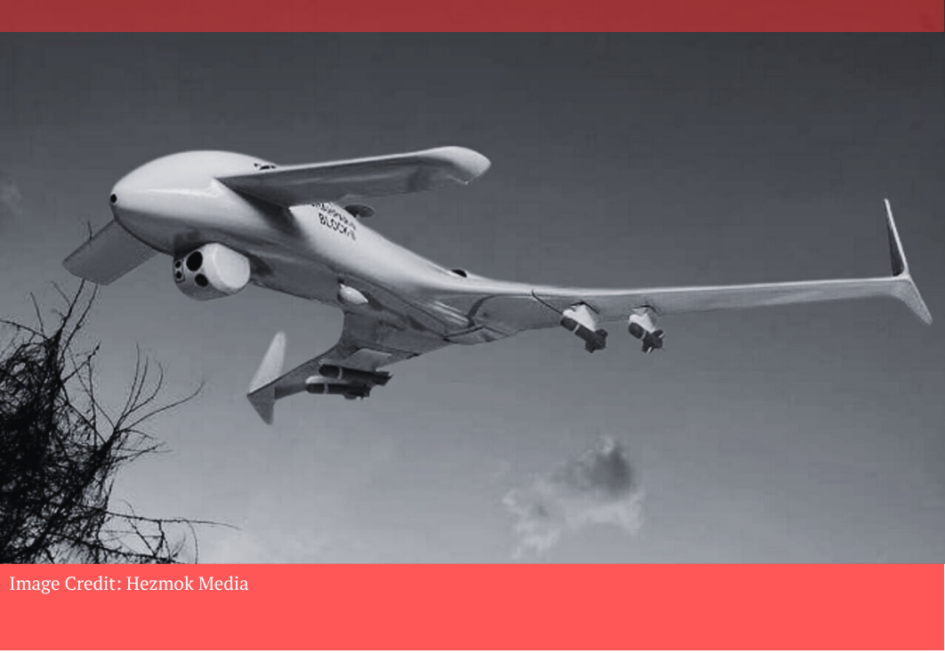
As per ongoing trends, drones have become almost ubiquitous in modern combat. More than 100 countries, as well as many stateless actors, already have military drones. The era of weaponized UAVs began in 2002 when a United States [“US”] strike on Al-Qaeda operatives in Yemen took place, and since then, it has grown far beyond mere surveillance. Modern drones can circle for hours and strike at targets thousands of kilometres away, allowing for cross-border missions that challenge territorial boundaries.
The scale of this revolution is staggering; the reported drone strikes have more than tripled from roughly 4,525 in 2023 to about 19,704 in 2024. Most significantly, UAVs are now deployed “not just by states, but increasingly by non-state armed groups”, with inexpensive commercial drones having been weaponized by insurgents and militias alongside national military forces.
The global fleet of networked drones for civil, commercial, and defence purposes reached an estimated 2.8 million units by 2024, while the military drone market was valued at approximately USD 15.23 billion that same year. In recent years, Turkey has dominated the export market, accounting for nearly 65% of armed drone sales (69 deals to 40 countries since 2018), and today’s conflicts reflect these patterns sharply.
From November 2021 to November 2024, at least 943 civilian deaths have taken place, which have been documented in 50 separate incidents of drone attacks. The cost of human life involved in all this is enormous.
UN observers say that drone strikes caused 70% of civilian deaths in parts of Kherson in Ukraine in early 2025.1
These developments give rise to pressing legal questions. IHL rules governing the conduct of war apply to the use of UAVs in armed conflict2; however, core principles such as distinction, proportionality, and respect for sovereignty were formulated long before unmanned extra‑territorial weapons existed.3
Thus, the legal frameworks haven’t kept pace with this unprecedented growth. IHL requires new weapons to be reviewed.4 In particular with respect to targeted strikes, many analysts have underscored the persistent lack of legal clarity concerning the use of armed drones.
APPLICABILITY OF INTERNATIONAL HUMANITARIAN LAW TO DRONE OPERATIONS
Armed drones are subject to the same rules under IHL as other means or methods of warfare. There is no distinct law for UAVs. The International Committee of the Red Cross [“ICRC”] has recently stated that IHL does not prohibit drones. Drones must, however, be used in accordance with the same core rules that govern all military operations, like distinction, proportionality, and precautions.5 In many ways, drones can actually help militaries to obey these rules. Their real-time video, long flight time, and precision sensors enable commanders to get more information to determine targets and reduce civilian casualties.6
Parties to a conflict must be able to distinguish between civilians and combatants, as well as between civilian objects and military objectives.7 Drones, which can monitor an area for hours and send back high-resolution images, allow militaries to make these decisions with more care. Experts note that these technological advantages are essential for IHL compliance, as they enhance situational awareness and reduce errors.8 The ICRC’s guidance on “direct participation in hostilities” still provides the benchmark.9 Many scholars maintain that drones do not alter the rules of distinction; rather, they expand the means available to militaries to comply with them.
Proportionality and precautions are also essential requirements under drone strikes. IHL also prohibits attacks that would cause civilian harm that would be excessive in comparison to the anticipated military advantage.10 Commanders are required to take all feasible precautions to verify targets and to minimize collateral damage.11 Western armies typically say drones are furthering such precautions by permitting delayed strikes, multiple confirmation passes, and a live abort option. Tactics such as ‘double tap’ strikes, if employed, would breach the duty of due care. This shows that drones do not rewrite the law; compliance remains a question of responsible operational judgment based on the long-standing protections within IHL.
A key point of contention is the question of whether IHL applies outside regular battlefields. The ICRC has indicated that if a drone strike takes place in a non-conflict zone, it may be human rights law rather than IHL that applies.12 Some Western scholars hold the contrary view, which is that if a state commits a cross-border use of force without consent, this would in itself amount to an international armed conflict and trigger the application of IHL.13 Western states frequently regard their drone campaigns as part of a continuous armed conflict with established armed groups, and therefore treat them as IHL operations even when conducted outside recognized battlefields.
Article 36 of Additional Protocol I requires states to review any new weapon or method of warfare that may cause widespread, long-term and severe effects.14 This also includes drones, their weapons, and their targeting systems. States must carefully assess whether these technologies comply with IHL before employing them.15
EXTRATERRITORIAL USE OF FORCE, SOVEREIGNTY, AND THE LEGALITY OF CROSS-BORDER DRONE STRIKES
The modern debate about the extraterritorial use of force, particularly the legality of cross-border drone strikes, sits at the intersection of jus ad bellum, sovereignty, and an increasingly elastic interpretation of the UN Charter. Anchored in Articles 2(4) and 51,16 the design of the Charter was to establish a high threshold for the lawful use of force, states shall refrain from threatening or using force, and may exercise self-defence only “if an armed attack occurs.”
The ICJ’s judgment in Nicaragua confirmed that both provisions form part of customary international law, binding upon all states and firmly rooted in necessity and proportionality.17 Yet, contemporary drone warfare strains these fetters in unprecedented ways. Perhaps nowhere is this tension more apparent than in cross-border drone strikes carried out without the consent of the territorial state.
When the United States killed Iranian General Qasem Soleimani on Iraqi soil in 2020, for example, the strike was justified as anticipatory self-defence. However, no evidence of an imminent armed attack was found by the UN Special Rapporteur on Extrajudicial Killings, who concluded that the killing was an arbitrary deprivation of life.
Beyond the immediate facts, the episode underlined a troubling shift. States increasingly stretch the imminence requirement to justify operations that encroach upon another state’s territorial and political sovereignty.18
The classical Caroline formula, which requires that a threat be “instant, overwhelming, and leaving no choice of means,” has given way to more flexible and often vague notions of “continuing threats.” The United States and Israel, for example, argue that long-term terrorist activities can themselves constitute an ongoing imminent threat, even absent specific intelligence of a forthcoming attack. This doctrinal loosening widens the legal space for cross-border strikes, yet further dilutes the protective function of sovereignty, a core principle the Charter sought to preserve. State practice following 9/11, especially in the wake of Security Council Resolution 1368,19 accelerated this trend by opening the door to invoking Article 51 against non-state actors operating from foreign territory.20
Drone strikes in Pakistan’s tribal areas, Somalia’s hinterlands, and Yemen’s mountainous regions became an emblem of a new paradigm and use of force in states neither at war with the acting state nor fully consenting to military operations. At the centre of this shift has been the “unwilling or unable” doctrine. It is the proposition that when a host state is unable to suppress threats emanating from its territory, another state may lawfully use force within its borders.
Despite having no treaty basis or ICJ imprimatur, the doctrine has been repeatedly invoked to justify operations in Pakistan, Syria, Iraq, and elsewhere.21 Critics counter that accepting any such doctrine risks hollowing out the principle of sovereign equality by allowing powerful states unilaterally to determine when another state’s control is insufficient. The legal controversies over sovereignty and extraterritorial force sharpen further when viewed through the lens of practice.22
The 2011 U.S. drone strike killing Anwar al-Awlaki in Yemen rested on an expanded, counterterrorism-oriented conception of imminence. Israel’s targeted killing of Salah Shehadeh in Gaza and Turkey’s ongoing drone operations against Kurdish groups in Iraq and Syria reflect similar anticipatory self-defence claims with little transparent evidence of immediate threat.23 Accountability remains equally fraught. Investigations, such as the New York Times’ 2021 inquiry into U.S. drone strikes, revealed systemic underreporting of civilian harm and minimal post-strike review, reinforcing concerns that extraterritorial lethality has outpaced legal oversight.
Taken together, cross-border drone strikes reveal a widening disjunction between the Charter’s vision of sovereignty and the operational realities of modern counterterrorism. Expansive interpretations of imminence, opacity around targeting decisions, and reliance on non-consensual force collectively threaten to erode the legal restraints designed to prevent unilateral violence. Unless states reaffirm the primacy of sovereignty and the strict conditions for self-defence, the risk remains that the Charter’s protections will steadily give way to a looser, more permissive regime for extraterritorial use of force.24
SUGGESTIONS
The rapid development of unmanned aerial vehicles in modern conflict highlights the fact that the international community is in great need to rebalance existing legal frameworks. Whereas drones were previously seen as nothing more than an extension of traditional airpower, their remote lethal use, cross-border capacity, and increasing semi-autonomous functions have produced operational realities that the established IHL and jus ad bellum rules struggle to constrain effectively.25 The absence of a dedicated treaty has created a permissive environment in which states rely on secret doctrines, expansive claims of self-defence, and opaque targeting policies that undermine both civilian protection and the legitimacy of international law.
Transparency through the state’s notified actions about UAVs would be a vital component. Obligatory post-strike reporting, civilian harm databases, and public disclosure of legal justifications would greatly increase accountability. The treaty should also include stringent enforcement and monitoring mechanisms.26 This requires independent investigative bodies, periodic compliance reviews, and robust export controls to deter misuse and curb irresponsible transfers, especially to non-state actors.
As drone technologies continue to expand, driven by AI-enabled targeting and commercial proliferation, flexible review clauses must be included that will guarantee adaptability to future developments. The act of crafting a dedicated UAV treaty is not an aspirational project but a necessary step in restoring normative clarity, protecting civilians, and preserving the integrity of the global legal order in an era of remote warfare.27
CONCLUSION
The development of drone warfare has outstripped the development of international law, leaving lacunae that endanger both the protection of civilians and the coherence of long-established legal principles. Although UAV activities are formally regulated by traditional IHL and jus ad bellum rules, it is evident from state practice that these policies are being increasingly strained by secret targeting policies, broad assertions of self-defence, and cross-border strikes carried out with limited oversight.
The threats to sovereignty, accountability, and human life will only increase as drones grow in power, availability, and autonomy. Standards such as transparent reporting requirements, stricter verification mechanisms, responsible export control, and binding norms are necessary to ensure that drone operations remain grounded in compliance with the principles of distinction, proportionality, and meaningful human control. Such changes would restore not only legal clarity but also global trust that the use of nascent military technologies is lawful. In the end, governing drones is not merely a technical matter; it is vital to maintaining humanitarian values and to preserving the strength of the international legal system in an era of increasingly remote warfare.
By Suryansh Shukla & Yudhishthir, 4th Year B.B.A. LL. B., Indian Institute of Management, Rohtak.
1 Human Rights Watch, “Hunted From Above: Russia’s Use of Drones to Attack Civilians in Kherson, Ukraine”, available at: https://www.hrw.org/news/2025/06/03/ukraine-russia-using-drones-attack-civilians (last visited on Dec. 6, 2025).
2 Nathalie Weizmann, “Remotely Piloted Aircraft and International Law” (ICRC, 2013).
3 supra note 3 at 2.
4 International Committee of the Red Cross, “Autonomous Weapon Systems”, ICRC Casebook – How Does Law Protect in War?, available at https://casebook.icrc.org/case-study/autonomous-weapon-systems (last visited on Dec. 6, 2025).
5 ICRC, “Ensuring the Use of Drones in Accordance with International Law” (Statement at the UN Human Rights Council, 22 Sept. 2014) paras 8–13.
6 Michael Lewis and Eric Crawford, “Drones and Distinction: How IHL Encouraged the Rise of Drones” 44 Georgetown Journal of International Law 1127, 1139–40 (2013).
7 supra note 15, paras 8–11.
8 supra note 16, at 1139–40.
9 supra note 15, para 11.
10 supra note 15, paras 12–13.
11 supra note 15, paras 12–14.
12 Annyssa Bellal, “Extraterritorial Targeting by Means of Armed Drones: Some Legal Implications” 96 International Review of the Red Cross 57, 76–77 (2014).
13 Annyssa Bellal, “Extraterritorial Targeting by Means of Armed Drones: Some Legal Implications” 96 International Review of the Red Cross 57, 76–77 (2014).
14 Protocol Additional to the Geneva Conventions of 12 August 1949, and relating to the Protection of Victims of International Armed Conflicts (Protocol I), 1977, art. 36.
15 R. Moyes, “The emergence of armed drones and how we assess the acceptability of new weapons” (Article 36, 2013).
16 The United Nations Charter, arts. 2(4), 51.
17 Military and Paramilitary Activities in and against Nicaragua (Nicaragua v. United States of America) (Merits) [1986] ICJ Rep. 14.
18 Sanh Shareef Qader, “Navigating Legal Challenges in Drone Cyber-attacks: The Case of the Kurdistan Region of Iraq” 23 Zanco Journal of Law and Politics 38 (2025).
19 U.S. Army TRADOC, “Iranian General Reiterates Goal to Expel United States from Region”, available at https://oe.tradoc.army.mil/product/iranian-general-reiterates-goal-to-expel-united-states-from-region/ (last visited on Feb. 1, 2025).
20 supra note 26.
21 Inter-American Court of Human Rights, “Resolución de la Corte Interamericana de Derechos Humanos”, available at https://www.corteidh.or.cr/tablas/R06755-6.pdf (last visited on Feb. 3, 2025).
22 Heon Kim, “The Inadequacy of International Law Frameworks in Addressing Technological Advances in Unmanned Aerial Vehicles (UAVs) and Potential Legal Solutions” (2025) (Unpublished Master’s thesis, Graduate School of International Studies, Seoul National University).
23 Franklin Berman, “The Application of International Humanitarian Law by National Courts” 2 American University Journal of International Law & Policy 415 (1987), available at
https://digitalcommons.law.seattleu.edu/context/faculty/article/1683/viewcontent/ (last visited on Feb. 6, 2025).
24 Mojtaba Touiserkani, “Temporal Deterrence: Response Velocity and Threshold Stability in NATO Airspace, 2022–2025” (2025).
25 Centre for Joint Warfare Studies, Synergy Journal: Drones and Multi-Domain Warfare (2023), available at
https://cenjows.in/wp-content/uploads/2023/10/Synergy-Journal-online-version-merged.pdf (last visited on Feb. 3, 2025).
26 Annyssa Bellal, “Extraterritorial Targeting by Means of Armed Drones: Some Legal Implications” 96 International Review of the Red Cross 67, 93–95 (2014).
27 Centre for Joint Warfare Studies, Synergy Journal: Drones and Multi-Domain Warfare (2023), available at
https://cenjows.in/wp-content/uploads/2023/10/Synergy-Journal-online-version-merged.pdf (last visited on Feb. 5, 2025).