Virtual is the new reality in the 21st century due to the emergence of technology and the dot com revolution. In today’s world information technology has affected man’s day to day life and plays a vital role in human life…. Continue Reading →
WHAT INSPIRED YOU TO PURSUE A CAREER IN LAW AND WHAT WERE THE KEY CHALLENGES YOU FACED DURING YOUR EARLY YEARS AS A LAW STUDENT AND LATER ON AS AYOUNG ADVOCATE? I was a second generation lawyer. My dad was… Continue Reading →
The right to work was something that women used to struggle for. Thankfully, this fact remains our history today. Regretfully, things aren’t any better right now either. Women not only faces domestic violence but also faces sexual assault in the… Continue Reading →
The essence of law lies in the spirit, not its letter, for the letter is significant only as being the external manifestation of the intention that underlies it Salmond The Latin word “interpretari,” which means “to explain” or “to comprehend,”… Continue Reading →
On August 9, 2024, a 31-year-old female postgraduate trainee doctor at R.G. Kar Medical College and Hospital was brutally raped and murdered. In today’s world, human beings are recognized as species that fall under different genders. Though men and women… Continue Reading →
Imagine this: textbooks pile up on your desk, deadlines loom like thunderclouds, and notifications from social media ping incessantly. The pressure to excel, to be connected, to “adult” in this fast-paced, hyper-connected world is relentless. And beneath the surface, a tide of anxiety and exhaustion threatens to pull you under. This, for many, is the reality of life in the modern landscape.
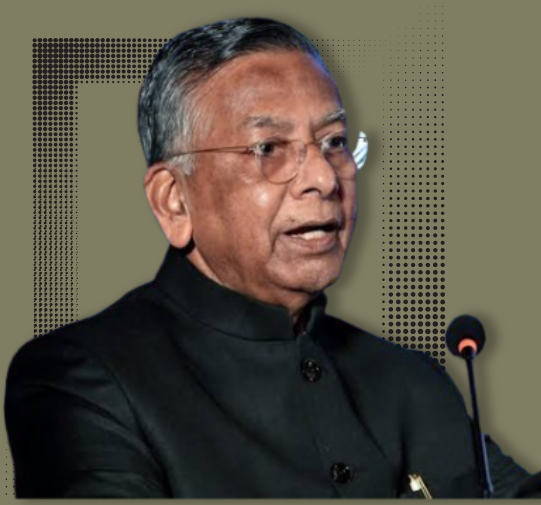
Question: In 1997, you began an impressive journey with the bar. Could you please tell us about your early days at the bar and which lawyers in particular had the most impact on you? In 1997, I embarked on my… Continue Reading →
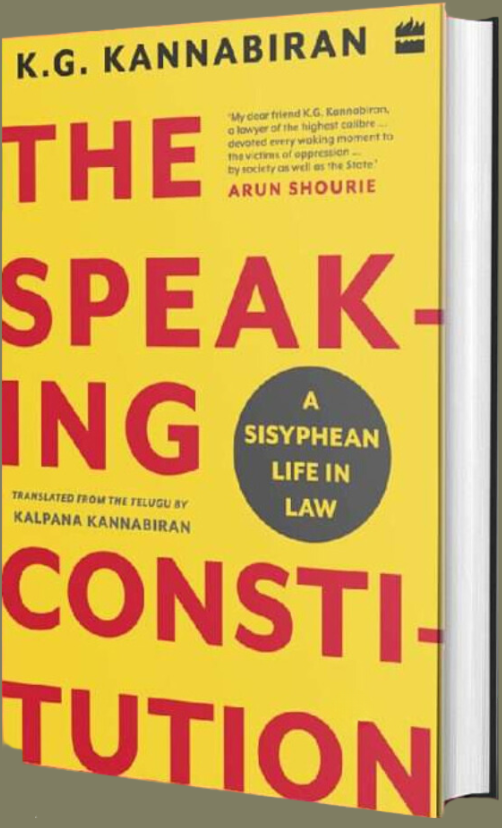
In “The Speaking Constitution: A Sisyphean Life in Law,” K.G. Kannabiran traces his life’s work as an incessant struggle for the protection and promotion of constitutional values, unifying the two.
The petitioner, a US-based business that was first established in 1954 as BURGER KING, is the second-largest short-carrier hamburger company in the world, with more than 18,000 outlets across 100 countries and 11 million daily customers. The Burger King logo was originally registered in India in 2010, and since 1979, it has been registered in 122 countries. In India, it started by strolling through more than 250 eateries in 2014. In 2011, the petitioner became aware of respondent no. 1’s class 43 trademark software, to which the registry had objected on the grounds that the petitioner’s mark was used. Despite applying for notice, the respondent’s mark became registered in 2016 without the petitioner’s knowledge. As a result of the petitioner’s infringement complaint, a 2014 injunction order was upheld in 2018.
Recently, the parliamentary punitive committee has made a proposal in the parliament to allow the children born in prison to stay with their mothers until the age of twelve instead of the current six years to ensure their well-being and growth. Well this will be a great step only if the children in the prison are not being deprived of the facilities and rights which they are entitled to and their stay in the prison is not prejudicing them being part of the society.
‘The current policy allows children under the age of six to remain in the prison with their mothers; children older than six, if no family member is prepared to care for them, are sent to institutions managed by the State’s Women and Child Welfare Department.’
Essentially, this asks if staying with the mother is better for the child. Children of incarcerated parents are the most vulnerable group of the society. Many times they have been disentitled to certain basic provisions because of their parent’s involvement in an offending behavior.
The latest Prison Statistics India Report 2020, states that as of December 31, 2020, there were 1,427 women prisoners with 1,628 children, among the total 20,046 women prisoners countrywide. Of this number, 1,184 women prisoners were under trial prisoners accompanied by 1,345 children and 214 convicted prisoners, who were accompanied by 246 children.
The rise of Artificial Intelligence (AI) brings both promise and skepticism. Skepticism arises from the unpredictable consequences and the complexities of AI technologies, leading to concerns about misuse and potential negative impacts on society. Despite this, encouraging AI development offers significant benefits, from data-driven decision-making to accelerated scientific breakthroughs. However, patentability challenges emerge, especially in India, where AI-related inventions face scrutiny under existing laws.
“Love has no gender – compassion has no religion – character has no race.” – Abhijit Naskar
On October 17, 2023, a Constitutional Bench made up of five Supreme Court judges rejected the idea of legalizing same-sex marriage, sending the issue back to Parliament for further study. The matter described here is whether this demographic has the basic rights while every citizen of the country is entitled to exercise their rights without being discriminated against. Hon’ble Justice Indu Malhotra once said that history owes an apology to these people and their families. Homosexuality is a valid part of the human sexual spectrum. They have the right to dignity and should be free of discrimination. Due to some traditional credence, people have negative perspectives about the community.
Millions of people flee from their home countries every year, seeking safety from persecution, war, or any natural calamities. Yet, instead of finding a home in another country, they end up facing a lot of challenges. The term “refugee” has always had a negative connotation because of the various issues a nation faces due to refugees. But the actual victims here are the refugees themselves. They are the people in a new country, wondering about their rights and facing an existential crisis. According to the United Nations High Commissioner for Refugees (UNHCR), “Refugees are people who have fled their countries to escape conflict, violence, or persecution and have sought safety in another country.”
Article 21 of the Universal Declaration of Human Rights states that everybody has the right to participate in the governance of their country, directly or through freely chosen representatives. Suffrage is a civil right which provides the right to vote in elections.
In India according to the National Criminal Record Bureau, out of the total population, 5,73,220 prisoners were in prisons on 31st December 2022. In addition to this, Article 25 of the International Covenant on Civil and Political Rights stipulates that each subject should have rights and opportunities, and must not be concerned under Article 2, i.e. race, color, sex, language, religion, politics, or alternative opinions, national or social origin, property status, birth, or other conditions. The Universal Declaration of Human Rights (UDHR),in Article 21(3), states that “The will of the people shall be the basis of the authority of government,” emphasizing the importance of the right to participate in governance.
The sun blazes on, the wind gushes, the oceans roar, the peaks melt, the trees die…but man carries on. As the earth yelps for help, the human turns deaf only to heed when his mind shows him a selfish reason. Is this not treason?
History serves as a remarkable testament to the existence of sensitivity to the environment since the days of yore. Systematic planning evident in the Indus Valley Civilization, the inclusion of environmental concerns in countless mantras in Vedas, stringent departmentalization of the environment for judicious utilization in Kautilya’s Arthashastra, and the Gupta patronage to environmental pursuits are all evidence of the might and power nature holds over the reasoned fallacies of humans.
As the throes of the Industrial Revolution hit the conscience of mankind, nature was subdued in the growing shadows of economic prowess and development. The pangs of widespread urbanization coupled with burgeoning factors causing pollution have led to the usurpation of nature’s status quo from a worshiped entity to a silent sufferer at the hands of its offspring. The present scenario deals with a startling call to attend to nature’s dissipating and deteriorating condition as, with the wake of each dawn, man realizes the impermanence of resources, the constraint of time, and the weeds of unprecedented development. As the world grapples to find a symbiotic solution to equipoise the teleological aspects of ecology and environment, the primary province that soars in the global skies is the ever-changing hues of the climate crisis. Against the backdrop of surmounting economic development, each country is making amends to remedy the ills inflicted on nature through various legal instruments. India too has taken galloping strides towards mitigating climate change, stabilizing an environmental economy, and imbibing the spirit of sustainable development. Through the kaleidoscope of India’s environmental legislations, policies, and treaties, the country’s judicial and jurisprudential topography of the environment is highlighted.
In the complex intersection of ethical considerations and existing legal intricacies, the imperative of animal rights is something that stands as a moral imperative. It is high time that societies reevaluate the present animal laws and also the treatment of these beings as a whole. With a rise in crimes against animals, it is often forgotten that we get to share this amazing planet with these sentient beings, and hence, it is nothing but our sole responsibility to ensure that they do not suffer due to our ill deeds. This article embarks on an in-depth analysis and exploration of animal rights by duly considering the historical background, ethical considerations, and legalities involved. Through this, the ongoing discourse with regards to the rights and protections given to animals has been reflected upon, and the requisite trajectory in order to ensure their protection has also been discussed. This article also explores the historical foundations of animal rights, tracing the trajectory from viewing animals as resources to recognizing their intrinsic value and moral consideration.
The Cosmopolitanism of the world and the idea of the world being a global village endeavour for inclusivity in terms of people’s cultures and societal norms as well as nations’ policies and laws. India too in the scenario is not lagging, accepting one western culture at a time, with a pinch of Indianness.
The author, Arvind P. Datar is a Senior Advocate of the Madras High Court.
Article 224A provides for the appointment of retired judges to serve the High Court as judges, even after their retirement.
In India, the freedom of speech has been guaranteed under Article 19(1)(a) of the Constitution of India, Act, 1950, which is in Part III of the Constitution devoted to Fundamental Rights.
“There are laws to protect the freedom of the press’s speech, but none that are worth anything to protect the people from the press.”
– Mark Twain.
© 2026 Vox Legis — Powered by WordPress
Theme by Anders Noren — Up ↑