
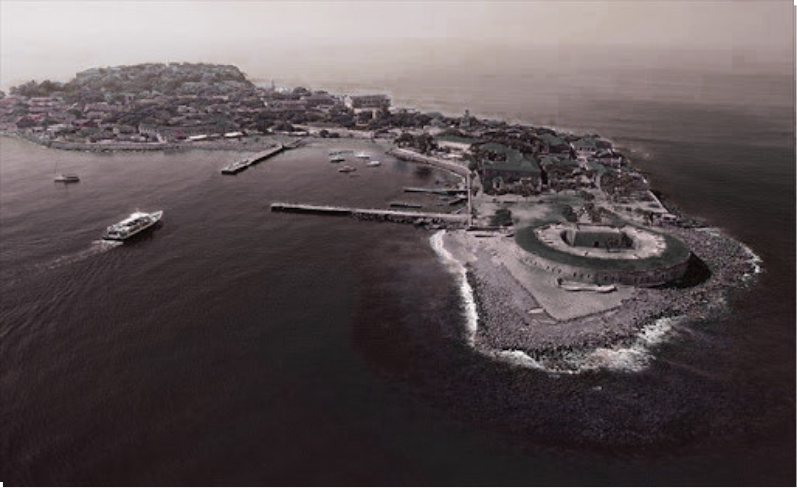
Relics of a bygone era often form the bedrock of post-colonial international border disputes. This saga of long ingrained geographies, waters, colonies, and conquests represents two Equator-neighbouring African nations, namely Equatorial Guinea and Gabon.
Equatorial Guinea sits gently on the equator, where Africa meets the Atlantic and land gives way to scattered islands. Split between a small mainland and far-flung islets, it is a country shaped as much by the sea as by history. Once Spain’s only colony in sub-Saharan Africa, it still speaks Spanish in an African rhythm, carrying the imprint of empire alongside its own inherited identities. What were once quiet, forgotten islands have now made the nation geopolitically visible; three tiny islets turning Equatorial Guinea into a focal point of sovereignty, resources, and international attention. Here, even small pieces of land have learned how to speak loudly to the world.
Gabon rests calmly along the Atlantic, dense forests breathing inland while the ocean keeps watch at its edge. It is a country that feels grounded and rooted to the mainland, continuous, familiar; shaped by rivers, rain, and people who have always known where their land begins. Yet history was less gentle. Under French colonial rule, Gabon inherited borders decided far away, written in treaties it never signed and rules it never shaped. When the dispute with Equatorial Guinea arose, Gabon did not lose through conflict, but through a stringent colonial framework, unratified agreements and forgotten colonial lines suddenly brought back to life.
Their legal journey is an apt description of the silent whispers that later turn out to become the talk of the town, and for all the correct historical, territorial, maritime, economic and legal rationales possible. The case of Gabon v. Equatorial Guinea is emblematic of this transformation. Three small, virtually uninhabited islands in the Gulf of Guinea, long ignored by colonial administrators and post-independence governments alike, became the fulcrum of a high-stakes international legal contest once offshore hydrocarbons entered the equation. At issue were three uninhabited islands: Mbanié/Mbane, Cocotiers/Cocoteros, and Conga, whose sudden geopolitical relevance stemmed not from habitation or strategic value, but from their proximity to hydrocarbon-rich maritime zones in the Gulf of Guinea.
The discovery of oil in coastal waters reignited the ‘Dormant Dispute with Renewed Vigour’. The prospect of potential oil wealth around these islets dramatically raised the stakes of occupying sovereignty over them. The allure of black gold made compromise very difficult, which pushed both nations to a legal showdown at the International Court of Justice (ICJ). The Court was asked a narrowly framed question: which legal instruments had the force of law in determining sovereignty over the disputed islands and the related boundaries?
The International Court of Justice (ICJ) then, in a decisive 14:1 judgment, resolved the dispute in favour of Equatorial Guinea, affirming its sovereignty over Mbanié, Cocotiers, and Conga, based on a colonial-era treaty concluded in 1900 between France and Spain. In doing so, the Court rejected Gabon’s reliance on a purported post-colonial agreement, the Bata Convention of 1974, holding that it lacked the force of law. It examines not merely what the Court decided, but why it decided as it did, and what the decision reveals about the enduring role of colonial treaties, evidentiary rigour, and judicial restraint in international law.
History
The disagreement between Equatorial Guinea and Gabon did not begin as a sudden territorial conflict but grew out of overlapping histories shaped by geography, colonial administration, and later political uncertainty. Long before independence, the coastal region of the Gulf of Guinea and its nearby islands formed part of a loosely connected maritime zone, characterised by flexible borders. Colonial rule altered this reality. Spain and France imposed formal territorial divisions, often through distant negotiations that paid little attention to how these spaces were actually used.
Equatorial Guinea emerged from Spanish control, while Gabon developed under French administration. During this period, small offshore islands such as Mbanié, Conga, Cocoteros and Corisco were assigned legal value through colonial documents, most notably the Paris Treaty of 1900, which attempted to clarify Spanish and French possessions along the coast. These arrangements remained largely theoretical while the islands themselves carried little practical importance.
After independence, uncertainty surfaced over how colonial titles should be applied between two sovereign African states. The rift deepened in the early 1970s when Gabon asserted control over Mbanié, and later cited the Bata Convention of 1974 as evidence of mutual understanding. Equatorial Guinea disputed this reading, seeing the Convention as ambiguous and incomplete. What followed was not immediate confrontation, but a prolonged period of diplomatic unease, made sharper by the growing strategic and economic value of surrounding maritime zones.
After years of inconclusive negotiations, Equatorial Guinea and Gabon jointly agreed to submit their disagreement to the International Court of Justice. Both states accepted the Court’s authority to give a final and binding decision on sovereignty over Mbanié, Conga and Cocoteros, and on the related maritime boundary. Thereafter, the International Court of Justice’s central subject for adjudicating the dispute was to determine whether the legal titles, treaties and international conventions invoked by the parties have the force of law.
Reasons:
- The Special Agreement
The Special Agreement between Gabon and Equatorial Guinea narrowly defined the Court’s mandate. The Court was not asked to delimit land or maritime boundaries, nor to decide sovereignty over Mbanié/Mbañe, Cocotiers/Cocoteros and Conga, but to determine whether the legal titles, treaties and international conventions invoked by the Parties possess binding force in their mutual relations. The Parties agreed on several fundamentals: the applicability of the 1900 Franco-Spanish Convention, their freedom to invoke titles beyond those expressly listed, and the limited jurisdiction conferred by Article 1 of the Special Agreement. Their disagreement centres on the meaning of “legal titles”. Applying Article 31 of the Vienna Convention, the Court rejected an interpretation that would reduce legal titles to treaties alone, affirming that a title may also constitute the source of a right, including through succession. Gabon and Equatorial Guinea diverge on which instruments meet this threshold. Importantly, Equatorial Guinea did not invoke uti possidetis juris, which essentially means that new States inherit pre-independence administrative boundaries or effectivités (the exercise of actual authority on the ground) as independent titles, relying on the latter only to corroborate claimed rights.
- The Bata Convention
Gabon placed the 1974 “Bata Convention” at the centre of its case, presenting it as a binding legal title capable of settling the land boundary, maritime delimitation, and sovereignty over Mbanié/Mbañe, Cocotiers/Cocoteros and Conga under the Special Agreement. Equatorial Guinea, by contrast, denied that the instrument ever acquired legal force. The Court approached the issue by asking a single, decisive question of whether the Parties intended to be legally bound. While the text of the Bata Convention, its preamble and provisions on cession, recognition of sovereignty, and maritime boundaries contained features typical of a treaty, other clauses, including Article 7 and the nota bene (take note of), rendered those commitments conditional on future agreements, introducing internal ambiguity. The surrounding circumstances offered little clarification: there were no reliable preparatory materials, no contemporaneous records, and the alleged final communiqué from Bata was never produced in full, leaving its authenticity and relevance uncertain. The Court found the Parties’ subsequent conduct decisive. The Convention was never implemented, never invoked during decades of post-1974 negotiations, and was noticeably absent even from diplomatic protests touching directly upon the disputed islands and maritime claims. Taken together, this conduct demonstrated that the Parties did not regard the Bata Convention as binding. The Court therefore concluded that it was not a treaty in force and could not qualify as a legal title under Article 1 of the Special Agreement.
- The Delimitation of their Common Land Boundary
In examining the land boundary, the Court focused on the legal titles invoked by both Parties and their shared reliance on succession to colonial boundaries. Gabon argued that the land boundary flowed from the 1900 Franco-Spanish Convention, as later altered by the 1974 Bata Convention. Equatorial Guinea, by contrast, relied on succession to the territorial titles held by France and Spain under the 1900 Convention alone, including only those modifications made in strict accordance with that instrument. The Court recalled that, upon independence in 1960 and 1968 respectively, both States succeeded to the territorial titles of their former colonial powers. The dispute, therefore, turned on whether the boundary described in Article IV of the 1900 Convention had been lawfully modified under Article VIII and Appendix No. 1, which required proposals by commissioners or local delegates and express approval by the respective governments.
In the Utamboni River area, although a Franco-Spanish commission proposed adjustments in 1901, the Court found no evidence of formal approval by either government. Later administrative acts by Spain were met with repeated French protests, confirming the absence of consent. In the Kie River area, inaccuracies in the 1901 proposal were acknowledged by both Parties. The latter Governors’ Agreement of 1919 merely established a provisional line to prevent local incidents and did not follow the procedures required for a permanent modification. Post-independence conduct, including later agreements and infrastructure projects, likewise failed to demonstrate a lawful alteration. The Court therefore held that no valid modifications were made, and that the common land boundary rests solely on the Convention of 1900 as inherited by the Parties at independence.
- Sovereignty over the islands of Mbanié/Mbañe, Cocotiers/Cocoteros and Conga
In determining sovereignty over Mbanié/Mbañe, Cocotiers/Cocoteros and Conga, the Court began with the points of agreement between the Parties. Both accepted that the three islands,in immediate proximity to Corisco Island, have never had a permanent population, and should be treated as a single territorial unit. Since the Bata Convention of 1974 was found not to constitute a legal title, the Court confined its analysis to Equatorial Guinea’s claim of succession to the title held by Spain at the time of independence on 12 October 1968.
The Court first examined the treaties relied upon to establish Spain’s original title. The Treaty of El Pardo signed in 1774, by which Portugal transferred its possessions in the Gulf of Guinea to Spain, made no reference to Corisco or the disputed islands and could not serve as a source of title. The Franco-Spanish Convention of 1900 was likewise not a treaty conferring sovereignty over Mbanié/Mbañe, Cocotiers/Cocoteros and Conga. In the absence of a conclusive treaty, the Court turned to effectivités (effective exercise of authority over territory), assessing whether Spain had exercised authority in a manner that was intentional, continuous and uncontested.
Spanish instruments such as the Declaration of Corisco (1843), the Record of Annexation (1846) and the Charter of Spanish Citizenship (1846) referred to Corisco Island and its dependencies. The Court examined whether the three islands were understood as such dependencies. Diplomatic correspondence, the work of the Franco-Spanish Mixed Commission between 1886 and 1891, and contemporary French maps consistently treated Mbanié/Mbañe and the associated islets as natural dependencies of Corisco, a view France did not dispute. Spain’s authority over the islands continued after the 1900 Convention without protest. After independence, Gabon itself recognized Spanish control, notably through the Maritime Protocol of 1962 permitting Spain to maintain maritime signals at Cocotiers/Cocoteros. Following 1968, Equatorial Guinea openly exercised authority, including through its 1970 decree on territorial waters, which drew no objection. The Court therefore concluded that Spain held a valid title at independence, to which Equatorial Guinea lawfully succeeded, confirming its sovereignty over the three islands.
- The Delimitation of their Common Maritime Boundary
In addressing the delimitation of the common maritime boundary, the Court undertook a methodical and restrained analysis, focusing on legally binding instruments under the Special Agreement. Having already concluded that the Bata Convention lacked any binding force, it was excluded as a source of entitlement, leaving Equatorial Guinea’s claims as the sole basis for examination. The Court then scrutinized the Convention of 1900, recognising it as a legal title, albeit in a circumscribed sense. While the Convention did not itself create maritime rights, Article IV established the terminus of the land boundary, which the Court treated as the indispensable starting point for maritime delimitation. UNCLOS, by contrast, was regarded as a normative framework governing the methodology of boundary drawing rather than a source of concrete entitlements. Similarly, customary international law, while affirming that maritime rights emanate from land sovereignty, was considered justificatory rather than constitutive of legal title. Broadly, the Court concluded that Equatorial Guinea’s entitlement to maritime areas stems directly from its established sovereignty over land, as established in the Convention of 1900 and interpreted through the lens of the Special Agreement, thereby ensuring a legally coherent and principled basis for delimitation.
Operative Clause
The operative part of the judgment reveals a clear and sustained judicial consensus on the central legal issues. By fourteen votes to one, the Court rejected Gabon’s reliance on the Bata Convention, finding that it never acquired binding legal force between the Parties and therefore could not constitute a legal title under the Special Agreement. The only dissent on this point came from Judge ad hoc Pinto, appointed by Gabon. The Court then unanimously held that the land boundary titles of both States flow from the Franco-Spanish Convention of 1900, to which Gabon and Equatorial Guinea respectively succeeded at independence.
On the question of sovereignty over Mbanié/Mbañe, Cocotiers/Cocoteros, and Conga, the Court again ruled in favour of Equatorial Guinea by a vote of thirteen to two, concluding that Spain held a valid title in 1968 and that this title lawfully passed to Equatorial Guinea. The dissenting opinions were delivered by Judge Xue, a permanent member of the Court, and Judge ad hoc Pinto. Notably, Judge ad hoc Wolfrum, appointed by Equatorial Guinea, voted with the majority throughout.
The presence of ad hoc judges reflects the principle of equality of the parties under Article 31 of the ICJ Statute, which allows each State to appoint a judge when none of its nationality sits on the bench. These judges do not act as representatives but exercise the same judicial functions as permanent members. Finally, the Court unanimously confirmed that the Convention of 1900 fixes the land boundary terminus as the starting point of the maritime boundary, while UNCLOS applies only as a binding framework governing delimitation, not as a source of sovereignty or title.
Tail Enders
Separate opinions and declarations form the reflective closing layer of an ICJ judgment, allowing judges to endorse the outcome while recording principled reservations. Judge Yusuf’s separate opinion challenges the Court’s continued reliance on colonial-era concepts, urging a conscious departure from legal doctrines rooted in nineteenth-century colonial frameworks. Judge Tladi, likewise concurring in the result, cautions that the Court exceeded the narrow limits of its jurisdiction under the Special Agreement by engaging with effectivités rather than confining itself strictly to the Convention of 1900.
Judge Xue’s declaration, though distinct in form, fits within this closing dialogue. Her dissent on the islands issue arises not from national alignment or ad hoc appointment under Article 31, but from judicial restraint. While accepting the rejection of the Bata Convention and the limits of the Court’s mandate, she questions the decisive weight given to colonial records to settle sovereignty over islands unnamed and insignificant at the time, warning against allowing modern maritime interests to shape historical interpretation and underscoring the inherent limits of judicial settlement.
Judge Aurescu supported the judgment but stressed that the existence of the Bata Convention was never established and that boundary treaties require a very high threshold for modification by conduct. Judge ad hoc Wolfrum, appointed by Equatorial Guinea, concurred fully, clarifying that the Bata Convention remained a non-binding draft, that UNCLOS provides only a delimitation framework, and that the Court correctly respected its limited mandate.