
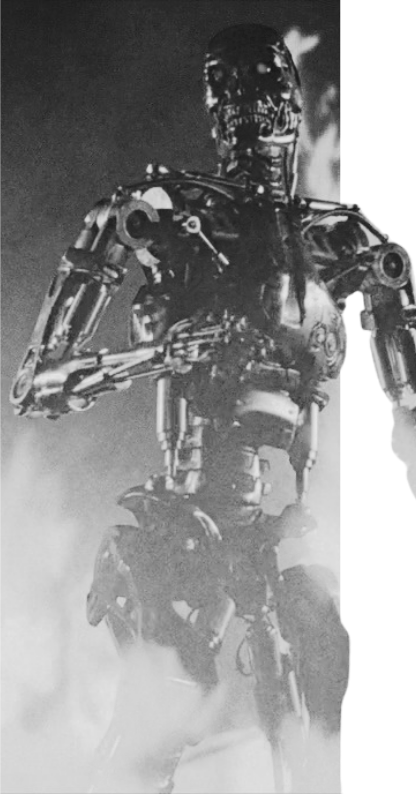
With the development of the technological structure of war, the international legal community is facing unprecedented challenges: How to regulate machines that determine who kills whom? The development of Lethal Autonomous Weapons Systems (LAWS), weapons capable of identifying, selecting, and attacking targets without human intervention, has sparked a deep debate on legitimacy, accountability, and ethics.
Supporters believe that autonomous weapons can reduce human error and reduce injuries on the battlefield, but critics warn that giving the job of making decisions to algorithms undermines the basis of International Humanitarian Law (IHL). The question is not only technical but also existential: Is the law able to continue to be used to control wars in the age of machines?
This examined the current IHL framework in terms of the regulation of autonomous weapons, explored the ongoing international negotiations and proposed legal approaches to ensure that accountability and human judgment remain at the centre of armed conflicts.
The Legal Status of Autonomous Weapons under IHL
International Humanitarian Law is established in the Geneva Conventions (1949) and its Additional Protocols (1977) and governs the methods of how war should be fought. Its principles of distinction, proportion, necessity and humanity require a constant human judgement in target and operational decisions.
However, LAWS challenges these assumptions. The rule of difference obliges combatants to distinguish between civilians and combatants, a task based on human understanding of the situation. Similarly, proportionality requires a determination of whether the damage to civilians is excessive in relation to the planned military benefits. Algorithms, regardless of their progress, cannot yet reproduce moral reasoning, situational awareness, or empathy – qualities that are essential to compliance with the IHL.
Article 36 of Additional Protocol I requires States to examine the legality of new weapons before their use. This provision mandates that States conduct a legal review to determine whether a new weapon, means, or method of warfare would be prohibited under Additional Protocol I itself or under any other applicable rule of international law, at the stages of study, development, acquisition, or adoption, before the weapon is ever employed. However, most States do not adapt these evaluation mechanisms to AI-driven systems. Without transparent and updated assessments, LAWS risks being deployed without adequate assessment of its conformity to humanitarian standards.
Ethical and Legal Accountability Gap
Accountability is at the heart of international law. Traditionally, the enforcement of the IHL is based on state responsibility and individual criminal responsibility. But autonomous weapons complicate both. When a LAWS performs an illegal strike, it becomes more complex to determine who is responsible. Commanders may not have anticipated the autonomy of weapons; programmers may claim that the system has acted beyond its encoded parameters; and manufacturers may be protected by state immunity doctrines. This spread of responsibility creates what researchers call the “crisis gap”.
International criminal law is based on the mental intention to commit an offence. The machine has no intention or consciousness. Consequently, in order to hold individuals responsible, it is difficult to prove the ability or negligence of the implementation when the system learns and adapts via algorithms.
These gaps may weaken deterrence and undermine the right of victims to compensation. As Mary Ellen O’Connell pointed out, accountability is not a procedural formality, but a “moral basis of war law.” Without it, IHL risks deterioration due to technological progress.
International Debates and Diplomatic Efforts
Since 2014, the Group of Government Experts (GGE) has been discussing the LAWS on Specified Conventions on Certain Conventional Weapons (CCWs). Despite the widespread recognition of the need for human control, it remains difficult to reach a consensus on binding regulation.
Countries such as Austria, Chile and Brazil support the adoption of a legally binding treaty prohibiting the operation of weapons that do not control humans. On the other hand, the United States, Russia and Israel believed that the existing IHL was sufficient and opposed restrictions that could hinder innovation or national defence.
The European Union supports the continued dialogue, but does not support the ban, emphasizing “responsible innovation”. In the meantime, coalitions of civil society such as the Campaign to Stop Killer Robots, urge preventive prohibitions to avoid another humanitarian crisis similar to that of chemical weapons or cluster weapons.
This diplomatic impasse underscores a deeper philosophical difference: can humanity ever allow machines to decide who lives or dies? At present, the discussion continues, but without a legally binding commitment, technology development is ahead of regulation.
Human Control as the Central Principle
In the absence of a consensus on the ban, the concept of “important human control” has become a middle ground. This implies that human operators must maintain the ability to make contextual judgments on the use of lethal force.
But ambiguity persists. Meaningful control requires continuous supervision or can be carried out during the programming process? States interpret the concept differently, and without common standards, the risk of inconsistent practices increases.
Human Rights Watch believes that even limited human supervision is insufficient when machines run at speeds above human reaction time. The scientists propose operational thresholds that require humans to control target selection and engagement in real time. However, these policies remain policy proposals rather than binding rules.
Broader Implications for International Law
The LAWS debate goes beyond humanitarian law to include human rights law, arms control, and sovereign state. The use of autonomous systems for law enforcement and counter-terrorism may violate the right to life as enshrined in Article 6 of the International Covenant on Civil and Political Rights (ICCPR). The deployment across borders also brings up issues of jurisdiction and attribution that challenge accepted norms of sovereignty.
Moreover, reliance on unilateral targeting could exacerbate asymmetric warfare. Wealthier states with advanced technology could conduct remote operations with minimal risk, while weaker states and civilians are the ones who suffer the most from mistakes. Such differences can upset the balance that international law seeks to strike between humanitarian protection and military necessity.
From a political perspective, uncontrolled proliferation of LAWS can reduce the political costs of war. Leaders may be more willing to authorize military action when human soldiers are in no danger, which increases the frequency of conflicts.
Proposed Legal Approaches
- The adoption of new protocols within the framework of the Convention could allow CCW States to negotiate new conventions on the use of autonomous weapons, which define the degree of autonomy and require human control. This is in line with previous protocols such as the 1995 Treaty on the Use of Blind Laser Weapons.
- Strengthening Article 36 of the Assessment States shall establish a transparent multidisciplinary assessment mechanism in which lawyers, engineers and ethicists can be involved to evaluate artificial intelligence-based systems. Regular publication of these reports can promote global confidence and compliance.
- Clarifying the responsibilities of States and individuals. The International Court of Justice (ICJ) may develop an interpretation principle to clarify the responsibilities of autonomous systems and to ensure that the reference to technical complexity does not imply a lack of accountability.
- Promoting transparency and information exchange in international weapons reviews and technical assessment databases, perhaps managed by the International Committee of the Red Cross or the United Nations Office for the Advancement of Disarmament, could enhance collective supervision.
- Encourage the establishment of a moratorium on preventive measures until binding norms are established. States may voluntarily commit to the establishment or deployment of a moratorium on the development or deployment of fully autonomous weapons, reaffirming their compliance with the precautionary principles of international law.
Future Challenges and the Need for Global Cooperation
As technology keeps growing fast, the world faces a simple but serious question: how can countries work together to stop autonomous weapons from creating new dangers for everyone? No country can handle this issue alone because war today is not limited to borders. If one country builds powerful autonomous weapons, others may feel pressured to do the same, just to stay safe.
This can easily become a race in which every nation builds faster and more deadly machines without thinking about long-term damage. Another challenge is that many countries do not fully understand the functioning of these systems and how quickly they can make decisions once they are deployed. When a machine runs at high speeds, even small errors in coding and data can cause huge losses of life. The situation is even worse if countries refuse to share information on the functioning of their systems, and other countries are worried and suspicious. Trust becomes difficult, and misunderstandings can lead to conflicts.
Global cooperation is needed because these weapons not only affect soldiers. They can affect ordinary people, particularly in countries where there is already fighting. When machines are allowed to decide who attacks them, innocent people can be injured simply because the system has misunderstood the situation or is reacting badly to the signal. Small countries with limited resources are at a greater risk because they may not have the power to stop or question the use of such weapons by stronger nations. To prevent this, countries must come together and agree on basic rules, share information honestly, and make sure no nation uses autonomous weapons in ways that put civilians in danger. Only through cooperation can the world make sure that technology does not replace human judgment in matters of life and death.
Conclusion
Autonomous weapons are more than just technological breakthroughs- they are testing the limits of law, morality, and even human nature. The Geneva Conventions, while still providing a moral compass for warfare, are under pressure in an age when algorithms, not people, cause something to happen.
Meaningful human control is not only a protection; it is the ethical and legal main point of war governed by law. If the international community does not take strong action, without control, the development of LAWS could undo decades of humanitarian progress and change war completely in ways that leave no room for mercy or justice. The time to regulate is not now, but now, before the world learns too late that machines cannot be held morally responsible.
By Krati Gupta, LL.M. Christ (Deemed-to-be-University).