
The Convention on the Prevention and Punishment of the Crime of Genocide of 1948 (Genocide Convention) is one of the fundamental instruments among the core building blocks of modern international law. Born in pursuit of the holocaust, it mirrors the international community’s shared commitment that ‘never again’ would intentional destruction of groups go unpunished. It has been eight decades after the convention’s adoption, but it still faces challenges in contemporary world conflicts.
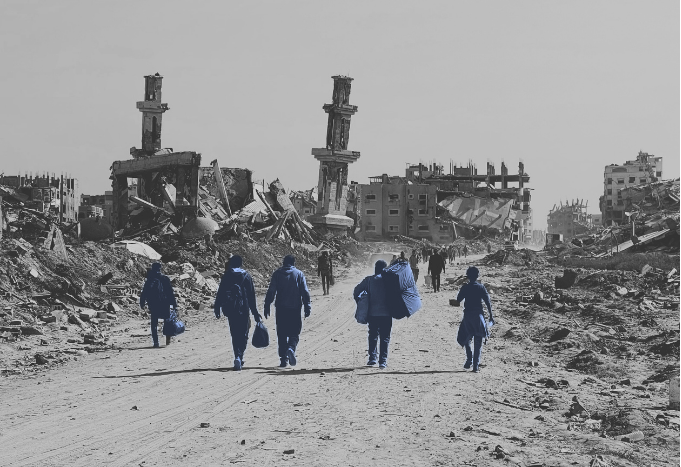
The situation in Gaza, over time, stirred a legal debate over what the convention means and covers, as well as its enforceability. In 2023, South Africa took Israel to the International Court of Justice (ICJ), accusing Israel of having committed and committing genocide in Gaza, in violation of the Genocide Convention, including Israel’s 75-year apartheid, 56-year occupation, and 16-year blockade of the Gaza Strip. In January 2024, the ICJ (while declining to make any final determination on the merits) found that some acts alleged by South Africa were “plausible” under the Convention, and issued provisional measures obligating Israel to prevent acts of genocide and ensure humanitarian access.1 In February 2024, Human Rights Watch and Amnesty International said that Israel had failed to comply with the ICJ’s provisional measures and that obstructing the entry and distribution of aid amounted to war crimes.2 On 28 March 2024, after a second request for additional measures, the ICJ ordered new emergency measures, ordering Israel to ensure basic food supplies, without delay, as Gazans faced famine and starvation.3
From Nuremberg to the Genocide Convention: The Legal Genesis
The concept of “genocide” was first articulated in 1944 by the Polish jurist Raphael Lemkin in response to the systematic annihilation of Jews and other groups during World War II.4 At the Nuremberg Trials (1945-46), the Allies prosecuted Nazi leaders under the categories of crimes against peace, war crimes, and crimes against humanity, but genocide as such was not yet a codified crime.
Lemkin’s advocacy led to the adoption of United Nations General Assembly Resolution 96(I) in 1946, which recognized genocide as a crime under international law, followed by the drafting of the Genocide Convention in 1948. Article II of the Genocide Convention defines genocide as “an action carried out with intent to destroy, in whole or in part, a nation, ethnic group, race, members of a certain national, ethnic, racial, and religious group, through acts which include killing, causing disappearance, and physical destruction through intentional infliction of life conditions.”5
Even though this definition has remained largely unchanged, its interpretation has evolved through jurisprudence of international courts over the decades.
Evolution of Jurisprudence: From Rwanda to Bosnia
The first practical applications of the Genocide Convention came during the post-Cold War era through the case of the International Criminal Tribunals for Rwanda (ICTR) and the former Yugoslavia (ICTY).
In Prosecutor v. Akayesu (1998), the tribunal interpreted that genocide may involve sexual violence if it is used with the intent to destroy a group.6 In Prosecutor v. Krstić (2001), the court found that the Srebrenica massacre was indeed genocide. It interpreted “in part” as being destruction of a substantial section of a group.7
The ICJ’s ruling in 2007 in the case of Bosnia and Herzegovina v. Serbia and Montenegro clarified that a state could be held responsible for genocide, as it ruled that while Serbia had failed to prevent and punish genocide, it did not perpetrate genocide.8 However, this ruling also established that there is a dual nature of the Convention, the prohibition of genocide itself and the duty to prevent and punish.
These precedents show that the intent to commit genocide (dolus specialis) must be proven in order to establish a genocide, which sets it apart as a mental element in contrast to other international crimes.
The Gaza Proceedings and its Prolonged Extension
In December 2023, South Africa filed an application before the ICJ accusing Israel had committed and was committing genocide in Gaza, contravening the Genocide Convention, including Israel’s 75-year apartheid, 56-year occupation, and 16-year blockade of the Gaza strip. Both Israel and South Africa have signed and ratified the Genocide Convention without reservation. The court, in its Order on Provisional Measures (26 January 2024), held that there was a credible risk of genocide taking place with an emphasis that the Palestinian people’s right to protection against genocide was credible and warranted interim protection. The Palestinian Foreign Minister, Riyad al Maliki, stated that the court decided in favor of humanity and international law.
Israel on the 26th of February 2024, filed a report, as mandated by the court, on the extent to which it has complied with the order, which could not be published. Human Rights Watch said that Israel had not complied with at least one provisional measure, stating fewer humanitarian aid trucks entered Gaza after the ruling than in the weeks preceding it.
Parallelly, numerous UN Special Rapporteurs and the UN Commission of Inquiry have stated that there are “reasonable grounds to believe” that the actions of Israel may reach the threshold of genocide. The United Nations Special Rapporteur on the Right to Food, Michael Fakhri termed what was happening in Gaza as “a situation of genocide”. UN Special Rapporteur on the situation of human rights in the Palestinian territories–Francesca Albanese, in her March 2024 report Anatomy of a Genocide, came to the conclusion that patterns of conduct in Gaza meet the legal threshold for genocide under the Convention.
On 5 April 2024, the court set the schedule for comprehensive submissions of legal opinions by South Africa and Israel. The deadline for filing of the South African memorial was set to be 28 October 2024, while for filing of the Israeli Response was set to be 28 July 2025. South Africa submitted its memorial with over 750 pages of text and over 4,000 pages of annexes and exhibits on 28 October 2024. The deadline set for Israel’s Response was further extended several times by the ICJ and set on 12 March 2026.
Concurrently, on 21st November 2024, after an inquiry into war crimes and crimes against humanity, international arrest warrants were issued by the International Criminal Court (ICC) against two top Israeli officials–Benjamin Netanyahu, who is currently the prime minister of Israel, and Yoav Gallant, the former Minister of Defense in Israel, for the war crimes known as starvation as a weapon of war and the crime against humanity known as murder, persecution, and other inhumane acts committed in Gaza. The United Nations Commission of Inquiry had urged that charges related to genocide should also be added in the international arrest warrant after finding the Israeli government guilty of multiple violations of the Genocide Convention.
Enforcement Challenges and the Politics of Accountability
Although it has moral credibility, the Genocide Convention is always faced with challenges in enforcing the convention. ICJ lacks a forceful mechanism of enforcing the decision it makes. For instance, in the Russia-Ukraine war, the ICJ urged Russia to stop attacking Ukraine by March 2022. Although the call was based on a legal decision, Russia rejected the request, making it a challenge to enforce decisions by the said institution.
The ICC, though empowered to prosecute individuals for genocide under the Rome Statute, faces jurisdictional and political constraints, especially when non-state parties or powerful states are involved. For instance, even Hungary is a member state of ICC; yet the Hungarian government refused to enforce the international arrest warrant issued against Israel Prime Minister Benjamin Netanyahu during his recent visit to Budapest.
Moreover, enforcement remains deeply politicized. The veto power in the UN Security Council can thwart referral and sanctions, resulting in selective accountability, which has led some scholars, such as William Schabas, to observe that “the effectiveness of the Genocide Convention relies more on political will than legal precision.” And the Gaza Genocide proceedings is a practical example of Schabas’ opinion.
The duty of prevention of genocide, as enunciated in Bosnia v. Serbia (2007), requires that all states, and not just perpetrators, have obligations to take action once they are aware of a serious risk of genocide. In practice, however, international responses have been tardy, partial, and uneven. The case of Gaza serves only to highlight this very gap between moral obligation and legal enforcement.
Modern Warfare and the Changing Nature of Genocidal Acts
The Genocide Convention was drafted in the context of industrial-scale, state-orchestrated extermination. Contemporary warfare, nonetheless, encompasses the use of asymmetrical warfare, the involvement of non-state entities, cyber warfare, and advanced weapons. Non-combatants can find themselves caught up in a “besieged area” where the “actus reus” of genocide may be met but the intent would be hard to establish as genocidal.
Legal scholars claim that the framework of the Convention has to develop in order to counter collective punishment, siege warfare, and destruction of the environment, as tools of collective destruction through genocide. So, the Gaza case represents an exemplary situation in testing the ability of genocide laws to adjust to modern ways.
Conclusion
From Nuremberg’s moral awakening to the ICJ’s ongoing Gaza proceedings, the international community’s confrontation with genocide has oscillated between aspiration and paralysis. The Genocide Convention still serves as a foundation of international criminal law; however, enforcing this Convention still relies on political cooperation and judicial courage.
The Gaza Proceedings highlight the ever-present relevance, as well as the vitality, that post-war law continues to maintain. If the relevance of the Convention continues to maintain its original intent, it will depend on the world’s willingness to maintain its principles.
By Hashim AK, 4th Year B.B.A LL.B. (Hons), Government Law College, Kozhikode.